Why Distant Hills Look Blue: Reading Atmospheric Perspective
Learn why distant hills look blue or pale, and use changing contrast, ridge outlines, and light to tell atmospheric perspective from visible land features.
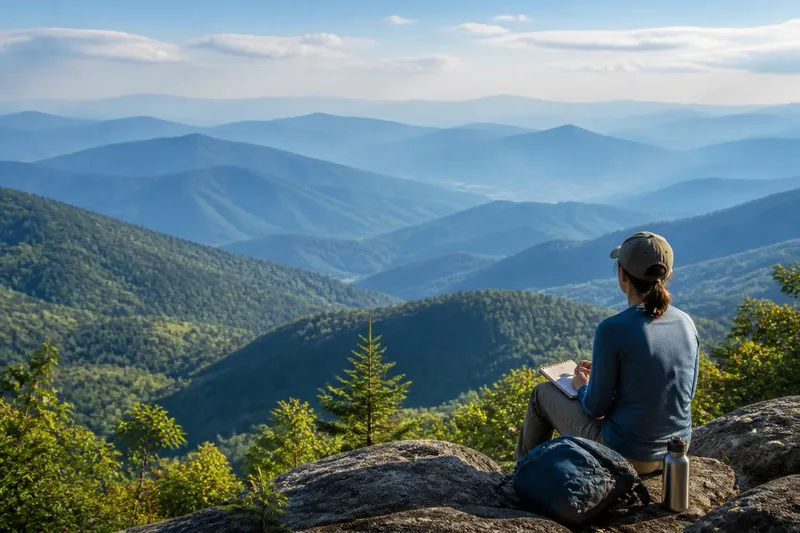
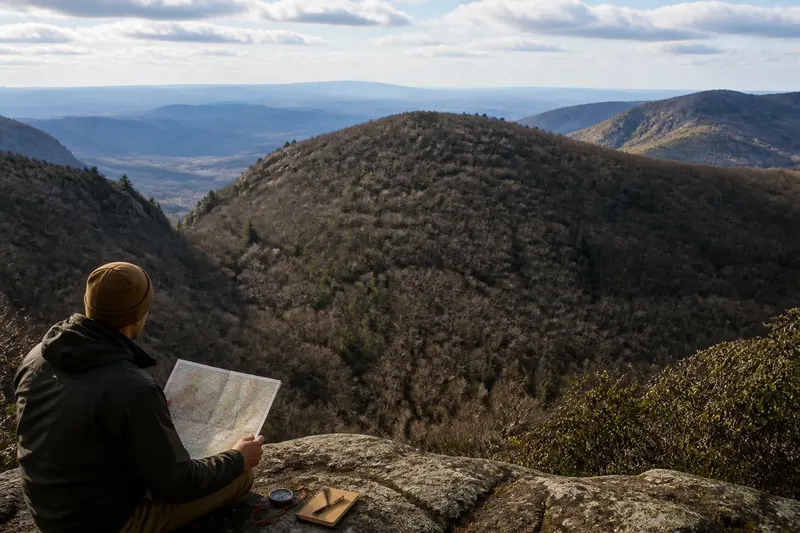
Distant hills often look blue or pale because light reaches your eyes through more air than it does from nearby slopes. Atmospheric perspective can soften a ridge and mute its colors, so the view is better read through several visible clues than through hue alone.
Why do distant hills look blue or pale?
Light traveling from a hillside passes through air containing moisture, dust, smoke, and other particles. Some light from the land is scattered or obscured on the way, while scattered light from the atmosphere also reaches your eyes. The result can be a softer outline and a cooler, paler appearance.
This effect is called atmospheric perspective. It can make a wooded, grassy, or rocky slope seem blue-gray without revealing which materials cover it. Distance also merges small features—such as tree crowns and exposed stones—into broad patches.
Which clues help distinguish air from land?
Look at how the whole view changes, not just one patch of color. If several far ridges become pale together and their outlines and internal contrasts soften, the atmosphere may be affecting the view. If a particular band or patch remains distinct while visibility changes, it may reflect a real difference in vegetation, rock, or slope exposure.
Nearby slopes offer a comparison, but not a perfect color chart. They are viewed through less air, yet may receive different sunlight or face a different direction. A shaded slope can appear cooler than a sunlit one even when their surface cover is similar.
- Observation: Several distant ridges look pale and their edges are soft. If this happens together, then describe the air’s apparent effect; otherwise, compare each ridge’s visible features separately.
- Observation: A slope’s outline is sharp but one band remains a different color. If the band stays distinct across views, then note it as a possible surface boundary; otherwise, leave its cause uncertain.
- Observation: One face is warm and bright while another is cool and shaded. If illumination differs, then record the light before comparing colors; otherwise, look for additional evidence of different cover.
- Observation: The ridge’s color changes while its broad outline stays steady. If contrast or visibility changes too, then describe a view affected by conditions; otherwise, retain both possibilities.
- Observation: A phone photo looks more saturated than the scene did to your eyes. If the display shifts the color, then use the image mainly to recall shape and contrast; otherwise, still treat its color as a camera rendering.
- Observation: Smoke, dust, moisture, or low cloud could all explain a washed-out horizon. If you cannot identify the cause, then record the appearance only; otherwise, name a cause only when you have independent evidence.
How can you compare the same ridge over time?
Choose a safe, accessible viewpoint, such as a public overlook or park path, and use a stable landmark to identify the same ridge. A small notebook or notes app is enough. Record the time, broad weather, whether the slope is sunlit or shaded, and whether its outline and patches appear sharp or blurred.
Compare views when lighting is similar if possible. When it is not, note the difference rather than treating the color change as evidence of a changed surface. A phone photo can help you recall the scene, but exposure, screen settings, and image processing can alter its colors.
Imagine you stand at the same park overlook on two mornings. The first morning is humid: the ridge appears pale blue, and its dark patches blend together. After a breezy, clearer morning, the outline sharpens and the patches separate. The useful result is that visibility and contrast changed alongside the apparent color; the observation does not identify what caused the haze or prove what lies beneath the softened patches.
What changes when light and weather shift?
Clouds can soften contrasts, while direct sunlight can warm one face and leave another in cool shadow. Low-angle sunlight may emphasize ridges with shadows; a different sun angle may make relief look flatter. Record whether the hill is sunlit, shaded, or partly clouded so you can interpret color in context.
Wind and recent weather can affect suspended particles, but a distant view alone rarely identifies whether haze comes from moisture, smoke, dust, or low cloud. Describe what you can see, such as a softened horizon or muted ridge, instead of assigning an unverified cause.
What do people ask about blue distant hills?
Does a blue-looking hill have blue soil or vegetation?
Not necessarily. Atmospheric perspective can shift a distant slope’s apparent color, especially when its surface detail is weak. Use hue alongside outline, contrast, lighting, and any visible surface patterns.
Can a photograph show a hill’s true color?
A camera records light, but its exposure, processing, and display affect the color you see. Photos can help compare broad features such as ridge shape and contrast, but they are not a dependable color reference by themselves.
Why does one side of a ridge look warmer?
Sun angle, shadow, slope direction, and surface cover can all affect its appearance. A warmer face alone does not establish that the rock or vegetation differs from the cooler face.
What if the hill always looks pale?
The appearance could reflect the surface, persistent atmospheric conditions, or both. Record the pale color alongside visible details, and leave the cause open if the view does not provide stronger evidence.
How should you describe the view?
Write down what is visible without turning an impression into a claim about the ground. For example, “ridge is pale blue; outline soft; dark patches indistinct” records the appearance more precisely than “blue rock.” If a clearer view later reveals tree cover or exposed stone, add that new evidence without rewriting the earlier observation.
- Viewpoint: Record the overlook, path, or other place you can identify again.
- Conditions: Note visible cloud, rain, wind, or haze without guessing at its cause.
- Illumination: Mark the ridge as sunlit, shaded, or mixed.
- Visibility: Describe whether the outline and surface patches look sharp or blurred.
- Color appearance: Use terms such as blue-gray, pale green, or warm brown, and make clear that these describe the view.
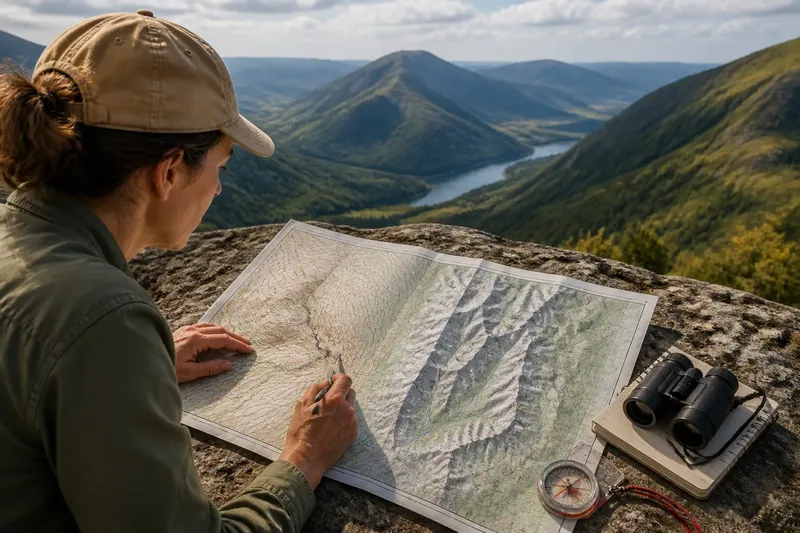
A map can help identify a ridge or valley and orient you to the landscape, but it cannot show how haze and light alter that feature from your viewpoint. Use the map for location and your notes for the changing appearance. When you describe a distant hill, its outline and contrast often tell you more than its color alone.